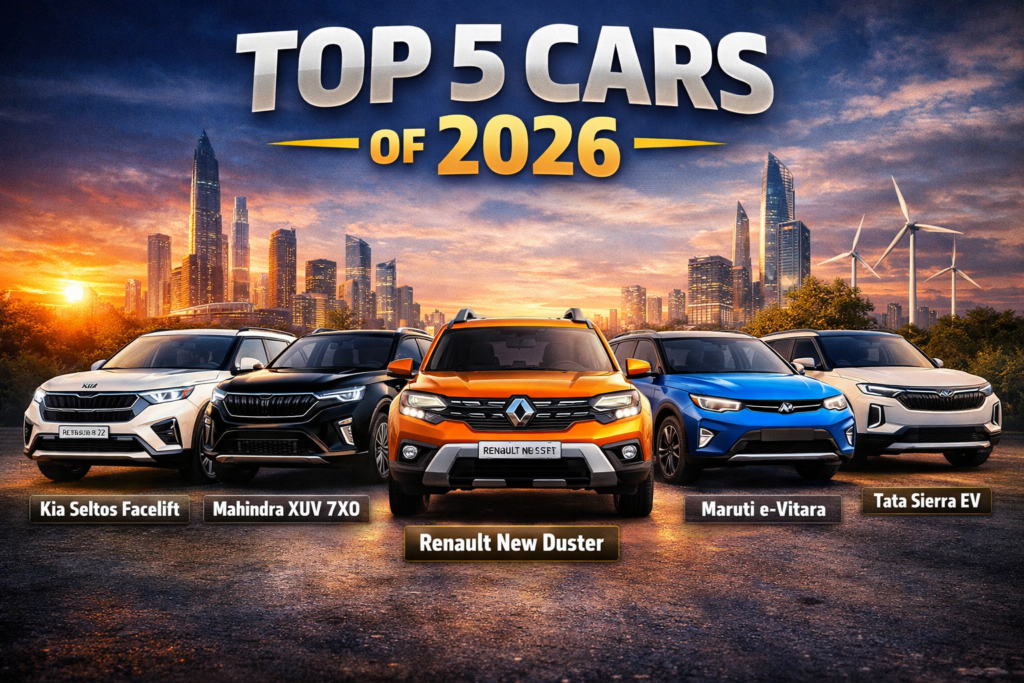
1. Kia Seltos (2026 Facelift)
Exterior Design
The 2026 Kia Seltos facelift builds on the success of its predecessor with sharper styling and a more premium presence. The front grille has been redesigned with a wider stance, flanked by sleeker LED headlamps. The rear now features connected LED tail lamps and a sportier bumper. Aerodynamic alloy wheels enhance both aesthetics and efficiency, making the Seltos stand out in the compact SUV segment.
Interior and Comfort
Inside, Kia has refined the cabin with improved materials and ergonomics. A dual-screen setup integrates a digital instrument cluster and infotainment system. Ventilated seats, ambient lighting, and enhanced sound insulation create a comfortable driving environment. The panoramic sunroof adds to the sense of spaciousness, appealing to urban buyers.
Performance and Powertrain
The facelift introduces a hybrid variant alongside petrol and diesel options. The hybrid system combines a 1.5-liter petrol engine with an electric motor, offering improved fuel efficiency and reduced emissions. Transmission choices include manual, CVT, and DCT. Suspension tuning ensures smoother rides on Indian roads.
Technology and Safety
ADAS Level 2 features such as adaptive cruise control, lane-keeping assist, and automatic emergency braking are standard. The infotainment system supports wireless Android Auto and Apple CarPlay, with OTA updates for software enhancements. Six airbags, electronic stability control, and a 360-degree camera reinforce safety.
2. Mahindra XUV 7XO
Exterior Design
The Mahindra XUV 7XO succeeds the XUV700 with a futuristic design. A bold front grille, LED matrix headlamps, and sculpted body lines give it a commanding presence. The rear features a full-width LED light bar, while 19-inch alloy wheels add to its premium appeal.
Interior and Features
The cabin emphasizes luxury and technology. A curved display merges infotainment and instrument cluster functions. Premium leather upholstery, electrically adjustable seats with memory functions, and a panoramic sunroof enhance comfort. The second row offers generous legroom, making it family-friendly.
Engines and Performance
The XUV 7XO offers petrol and diesel engines, with hybrid technology in select variants. The petrol engine produces 200 hp, while the diesel delivers 185 hp with strong torque. An all-wheel-drive option caters to off-road enthusiasts. Suspension tuning ensures stability and comfort at high speeds.
Safety and Technology
ADAS Level 2 features include blind-spot monitoring, traffic sign recognition, and driver attention alert. Seven airbags, a 360-degree camera, and parking sensors enhance safety. Mahindra’s infotainment system supports voice commands and connected car features.
3. Renault New Duster
Exterior Design
The 2026 Renault Duster returns with a rugged yet modern design. Built on a global platform, it features a wider grille, distinctive C-shaped LED DRLs, and roof rails. The body cladding emphasizes its adventurous character, appealing to SUV enthusiasts.
Interior and Practicality
The interior balances durability with comfort. A floating touchscreen infotainment system and semi-digital instrument cluster modernize the cabin. Supportive seats with improved cushioning make long drives comfortable. Generous boot space ensures practicality for families.
Engine and Efficiency
The Duster offers a 1.3-liter turbo-petrol engine and a hybrid variant. Transmission options include manual and CVT. Suspension tuning caters to Indian terrain, ensuring a smooth ride. The hybrid variant improves mileage and reduces emissions.
Safety and Connectivity
Safety features include six airbags, ABS with EBD, hill-start assist, and traction control. The infotainment system supports Android Auto and Apple CarPlay. Renault’s connected car app allows remote monitoring of vehicle health. Tire pressure monitoring and a rear parking camera add convenience.
4. Maruti Suzuki e-Vitara
Exterior Design
The e-Vitara is Maruti’s first mass-market electric SUV. Its design retains compact proportions but adds futuristic elements like closed grilles, blue accents, and aerodynamic wheels. Sleek LED lighting emphasizes efficiency and modernity.
Interior and Features
The cabin is minimalist yet functional. A large touchscreen displays EV-specific data such as battery range and charging status. Sustainable materials are used for seats and trims. Practical storage spaces make it family-friendly.
Battery and Performance
Powered by a 60 kWh battery pack, the e-Vitara offers up to 500 km range. Fast charging enables 80% charge in 45 minutes. Instant torque from the electric motor makes city driving effortless. Regenerative braking improves efficiency.
Safety and Technology
Safety features include electronic stability control, hill-hold assist, and multiple airbags. Connected car technology allows remote monitoring of charging and climate. OTA updates ensure the system stays current.
5. Tata Sierra EV
Exterior Design
The Tata Sierra EV revives an iconic nameplate with a futuristic twist. A panoramic glass roof, clean body lines, and LED light bars define its design. The rear silhouette pays homage to the original Sierra, while aerodynamic alloy wheels enhance efficiency.
Interior and Comfort
The cabin blends luxury with sustainability. Recycled materials are used for upholstery and trims. A large touchscreen and digital instrument cluster dominate the dashboard. Plush seating and lounge-style rear comfort make it ideal for long journeys.
Battery and Range
Equipped with Tata’s Ziptron technology, the Sierra EV features a 70 kWh battery pack with up to 600 km range. Ultra-fast charging achieves 80% charge in 35 minutes. Strong acceleration and smooth performance make it versatile for city and highway driving.
Safety and Innovation
Safety features include ADAS Level 2, multiple airbags, and a reinforced body structure. Connected car technology enables remote diagnostics and updates. V2L functionality allows powering external devices using the car’s battery.