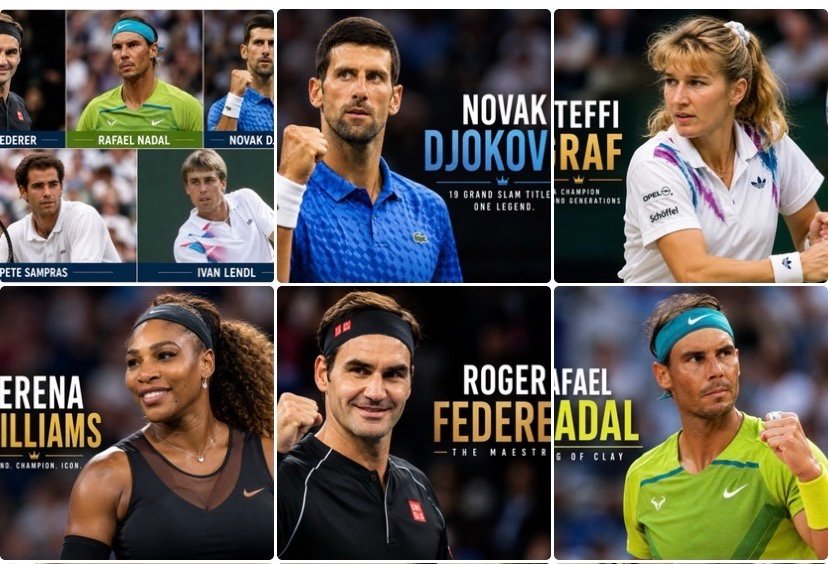
Tennis is one of the most demanding individual sports in the world, combining physical fitness, technical skill, mental strength, tactical intelligence and the ability to perform under enormous pressure. Over more than a century, the sport has produced extraordinary champions who have dominated different generations and created unforgettable moments on the biggest stages. From Wimbledon’s grass courts to the red clay of Roland-Garros, the hard courts of the Australian Open and the US Open, the greatest players have proved their ability to adapt and win against the best competition in the world. Ranking the greatest tennis players of all time is naturally subjective because different eras had different equipment, playing conditions, competition and professional structures. However, Grand Slam success, longevity, consistency, records, versatility and influence on the sport provide useful ways to compare legendary players. Based on a combination of these factors, five names stand above the rest: Novak Djokovic, Rafael Nadal, Roger Federer, Serena Williams and Steffi Graf. Together, these champions represent several generations of excellence and have helped define modern tennis.
1. Novak Djokovic
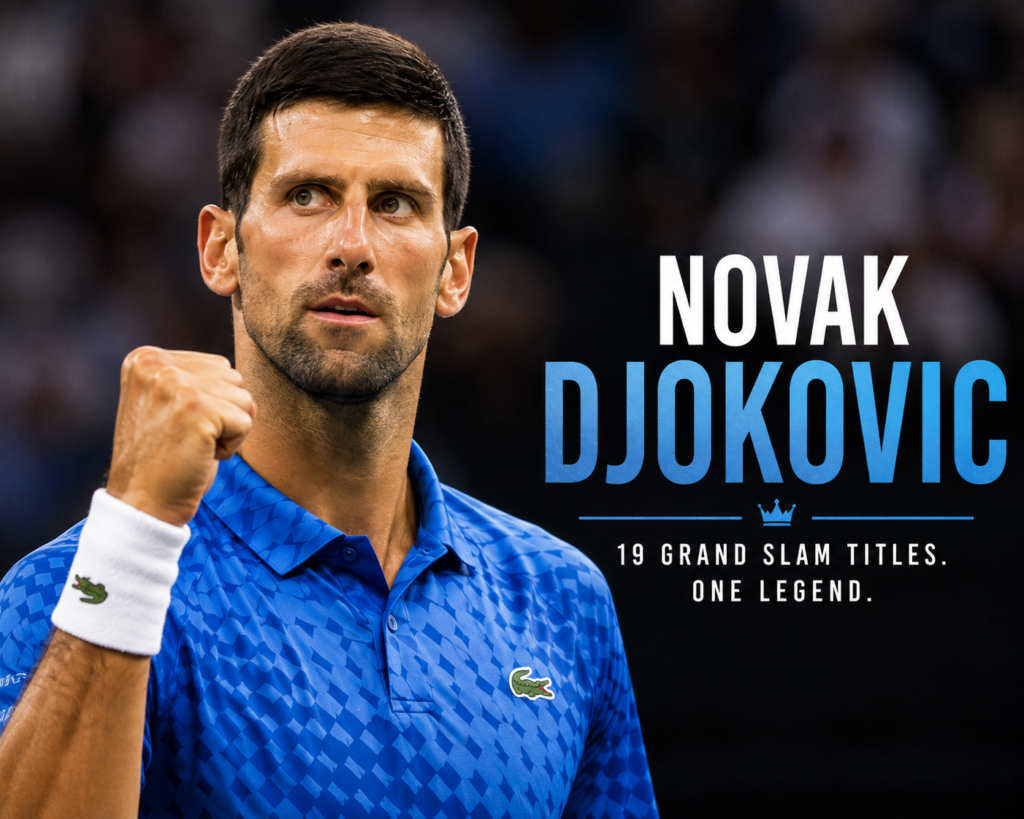
Novak Djokovic has built perhaps the strongest statistical case for being the greatest men’s tennis player in history. The Serbian champion has won 24 Grand Slam singles titles, the men’s record, with championships at all four major tournaments. His Grand Slam collection includes 10 Australian Open titles, three French Open titles, seven Wimbledon titles and four US Open titles. The distribution of his victories demonstrates his extraordinary versatility because he has repeatedly succeeded on hard courts, clay and grass. The ATP Tour lists Djokovic as the men’s Grand Slam leader with 24 major titles and also records him as the leader in Grand Slam match victories.
Djokovic’s rise to the top was not immediate. When he entered the professional scene, Roger Federer and Rafael Nadal were already established as the two dominant forces of men’s tennis. Djokovic gradually developed into a player capable of challenging both. His greatest strengths included an exceptional return of serve, remarkable flexibility, outstanding defensive movement and an ability to turn defense into attack almost instantly. His two-handed backhand became one of the most reliable weapons in the sport, while his return game consistently placed pressure on opponents from the first point of a match.
One of Djokovic’s defining characteristics has always been his mental toughness. He has repeatedly won matches after being placed under enormous pressure, particularly in Grand Slam finals and semifinals. His ability to save break points, recover from difficult moments and maintain concentration during long matches became an important part of his identity. He developed a reputation for thriving when matches became physically and psychologically demanding. His rivalry with Federer and Nadal created one of the greatest competitive periods in tennis history, with the three players pushing each other to extraordinary levels.
Djokovic’s longevity is equally impressive. His career has extended across multiple generations of players, allowing him to compete against legends from the Federer-Nadal era as well as younger stars. Even in 2026, at 39, he remained a major presence on the tour. His 2026 season has also demonstrated the physical demands of continuing at the highest level: he reached the Wimbledon semifinals but suffered an early US Open exit.
Another important part of Djokovic’s legacy is his ability to perform across different tournament conditions. While the Australian Open became his most successful Grand Slam, with 10 championships, he also developed into an elite clay-court competitor and one of Wimbledon’s most successful champions. His seven Wimbledon titles place him among the tournament’s greatest champions, while his three French Open victories demonstrate that he could overcome the extraordinary challenge presented by Rafael Nadal on clay.
For many tennis fans, Djokovic’s combination of major titles, longevity, adaptability, consistency and mental strength makes him the leading candidate for the men’s GOAT title. His career also illustrates how the modern game evolved into an extremely physical and tactical sport. His ability to defend, counterattack, return serve and extend rallies made him extraordinarily difficult to beat. With 24 Grand Slam titles, he currently sits at the top of the men’s all-time list.
2. Rafael Nadal
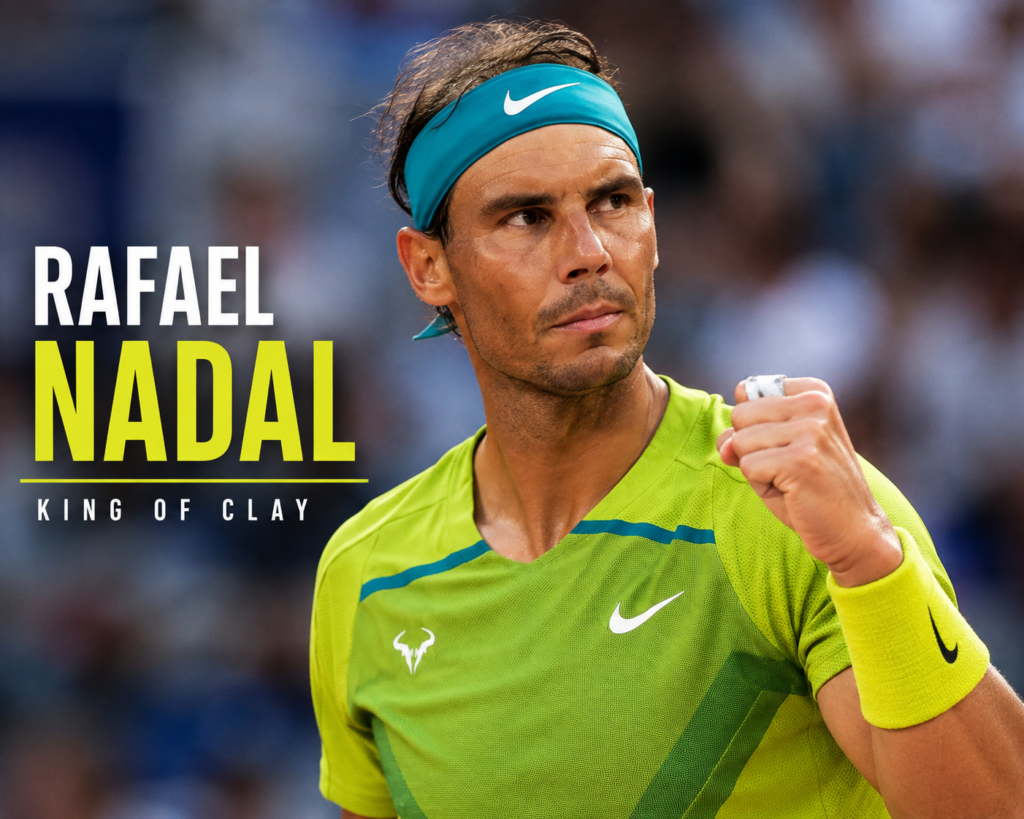
Rafael Nadal is widely regarded as one of the greatest competitors in sports history and arguably the greatest clay-court player ever. The Spanish left-hander won 22 Grand Slam singles titles, including an astonishing 14 French Open championships. His dominance at Roland-Garros is one of the most remarkable achievements in professional sport. The ATP Tour records Nadal’s 22 majors and his 14 French Open victories, while the ITF also lists him among the sport’s all-time Grand Slam leaders.
Nadal’s style of tennis was built around intensity, athleticism and relentless determination. His heavy topspin forehand became one of the most recognizable shots in tennis. He frequently used that forehand to attack opponents’ backhands, especially against right-handed players. His movement was extraordinary, allowing him to chase down balls that appeared impossible to reach. Rather than simply trying to hit winners, Nadal often forced opponents to play one more shot, then another, until an opportunity appeared.
His greatest achievement remains his extraordinary record at Roland-Garros. Winning the French Open once is an enormous accomplishment; winning it 14 times represents a level of dominance rarely seen in any sport. Nadal established himself as the ultimate clay-court specialist, but it would be inaccurate to describe him as successful only on clay. He also won Wimbledon twice, the Australian Open twice and the US Open four times, giving him a Career Grand Slam.
Nadal’s rivalry with Federer became one of the defining stories of tennis. Their contrasting styles made their matches particularly fascinating. Federer relied on elegant shot-making, an attacking all-court game and exceptional timing, while Nadal brought extraordinary physicality, topspin and defensive ability. Their Wimbledon finals, Australian Open battles and French Open encounters became iconic moments in tennis history.
Nadal also had an extraordinary ability to compete despite physical challenges. His career was repeatedly interrupted by injuries, yet he continued returning to the highest level. This made his 22 Grand Slam titles even more impressive. He had to manage a demanding playing style that placed significant stress on his body, but his determination repeatedly allowed him to overcome setbacks.
Perhaps Nadal’s greatest legacy is the example he created through his competitive mentality. He rarely gave opponents the impression that a match was over until the final point. His intensity between points, disciplined training approach and refusal to surrender became central elements of his public image. Even opponents and fans who supported other players often admired his professionalism and fighting spirit.
Nadal’s 14 French Open titles alone would make him one of the greatest players in tennis history. When combined with 22 Grand Slam championships across all four surfaces, his Olympic success, longevity and legendary rivalry with Federer and Djokovic, his position among the greatest players ever becomes undeniable.
3. Roger Federer
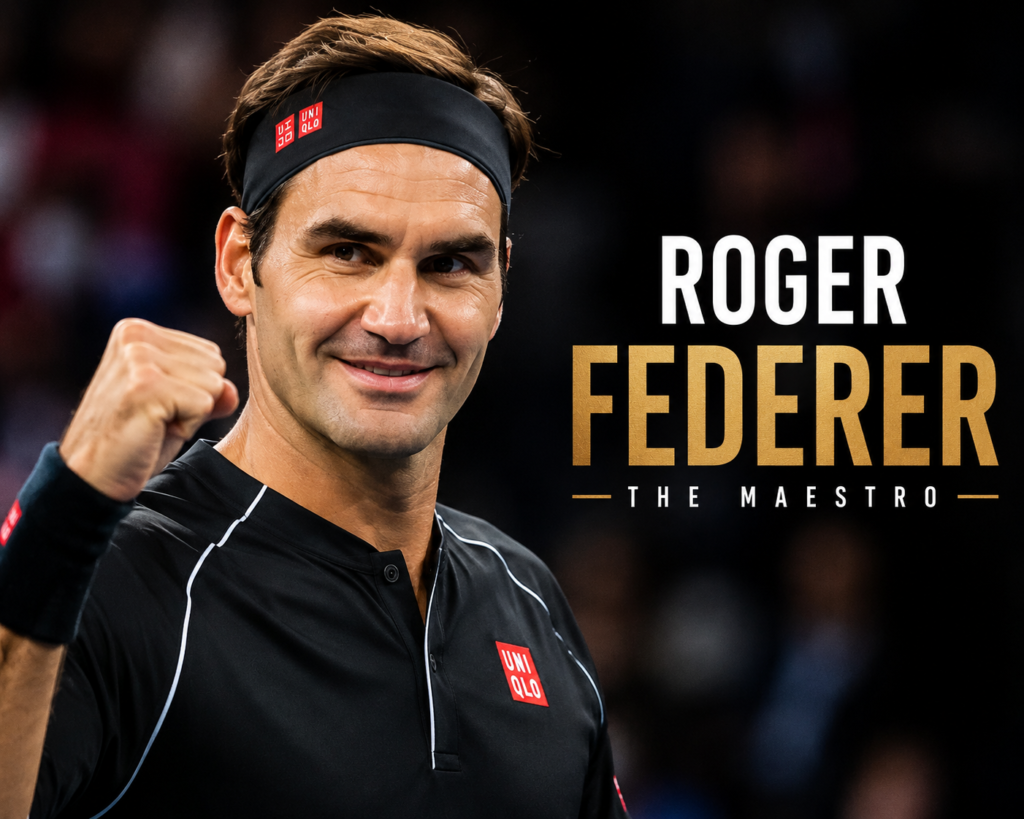
Roger Federer represents a different kind of greatness. The Swiss star became famous for his elegant style, extraordinary timing, effortless movement and complete all-court game. Federer won 20 Grand Slam singles titles, including eight Wimbledon championships, six Australian Opens, five US Opens and one French Open. His eight Wimbledon victories remain a tournament record in men’s singles.
Federer’s rise transformed the perception of what elite tennis could look like. His movement appeared effortless, his forehand was exceptionally precise and his one-handed backhand produced beautiful winners. He could attack from the baseline, approach the net, serve effectively and finish points quickly. His ability to change tactics during matches made him difficult to predict.
Wimbledon became the defining stage of Federer’s career. His combination of serve, forehand, movement and aggressive court positioning was perfectly suited to grass. He won five consecutive Wimbledon titles from 2003 through 2007, establishing himself as the tournament’s dominant player during that period. His rivalry with Nadal also produced some of the most memorable matches in tennis history, including their legendary Wimbledon final battles.
Federer’s success extended beyond grass. His six Australian Open titles and five US Open championships demonstrated his dominance on hard courts, while his 2009 French Open victory completed his Career Grand Slam. That French Open title was especially significant because Nadal had previously prevented Federer from winning Roland-Garros on several occasions. When Federer finally captured the championship in Paris, he joined the select group of players who had won all four majors.
Federer’s influence extended beyond statistics. He became one of the sport’s most recognizable global ambassadors. His calm personality, sportsmanship and elegant playing style attracted millions of fans around the world. For a generation of tennis followers, Federer was the player who made tennis look simple even when he was performing extraordinarily difficult shots.
His rivalry with Nadal and Djokovic created the era commonly associated with the “Big Three.” Together, the three players dominated men’s tennis for nearly two decades. Federer was the oldest of the trio to establish himself at the top and became the first of them to reach 20 Grand Slam titles. Although Djokovic eventually moved ahead with 24 and Nadal reached 22, Federer’s 20-major career remains extraordinary.
Federer’s legacy is therefore about more than winning. He demonstrated that efficiency, timing, technique and intelligence could be as powerful as raw physical strength. His influence on younger generations of players remains significant, and his style continues to be studied and admired by tennis fans worldwide.
4. Serena Williams
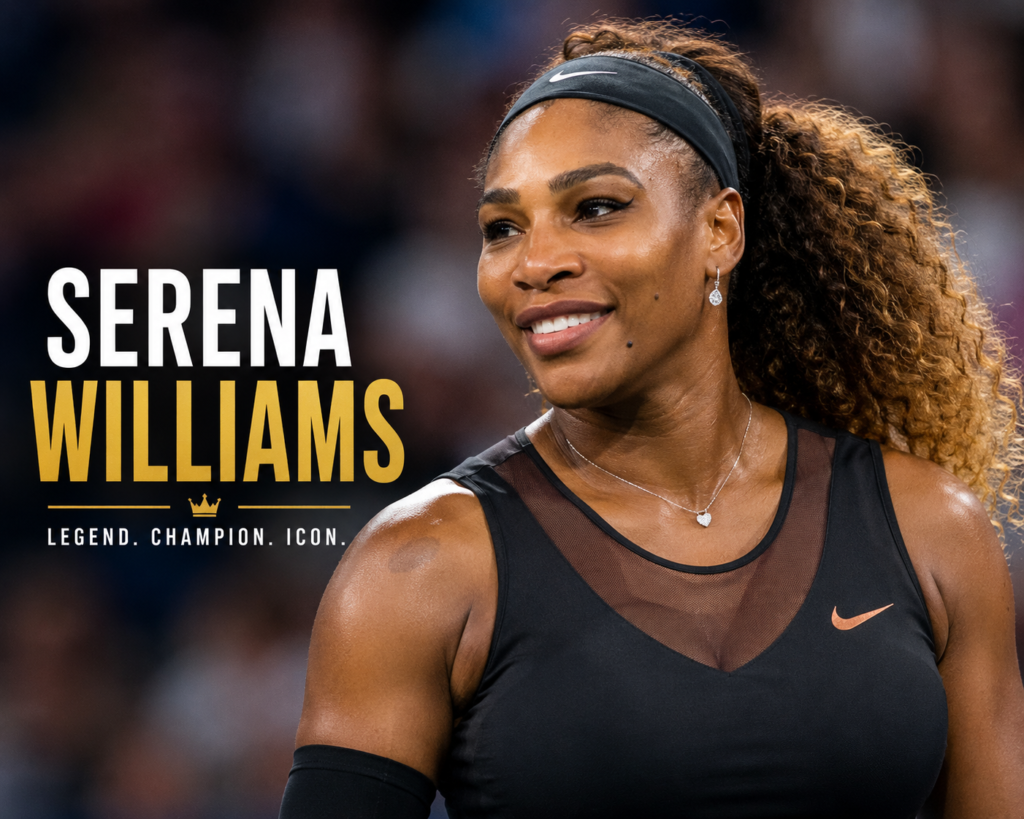
Serena Williams is one of the most influential and successful athletes in tennis history. She won 23 Grand Slam singles titles, the most in the Open Era, and spent years at the top of women’s tennis. Her major victories include seven Australian Opens, three French Opens, seven Wimbledons and six US Opens.
Serena’s game was built around extraordinary power and athletic ability. Her serve became one of the most feared weapons in women’s tennis, while her forehand and backhand could generate enormous pace. She also possessed the mental strength to perform under pressure, particularly in Grand Slam matches. Her ability to produce powerful serves when facing break points or championship pressure became one of her trademarks.
What made Serena particularly remarkable was her longevity. She competed successfully across multiple generations of players. She became a major champion in the late 1990s and continued reaching Grand Slam finals and winning major titles more than two decades later. Maintaining that level of excellence in professional sport is exceptionally difficult.
Serena’s career also included periods away from competition and significant challenges. Yet she repeatedly returned to elite tennis. Her determination to continue competing at the highest level helped turn her career into a story of resilience as much as sporting achievement.
Her rivalry with her sister Venus Williams was another unique feature of tennis history. The Williams sisters transformed women’s tennis with their power, athleticism and competitive mentality. They also achieved tremendous success together in doubles, creating one of the most successful sibling partnerships in professional sport.
Serena’s impact went far beyond tennis results. She became a global cultural figure and an inspiration to millions of athletes. Her success helped challenge traditional expectations about women’s tennis and demonstrated the importance of athleticism, strength and individuality. Her career encouraged younger players to believe that they could compete with confidence and ambition.
Although Margaret Court has 24 Grand Slam singles titles overall, Serena’s 23 majors are the most in the Open Era. The ITF’s all-time list places Serena third overall behind Margaret Court and level above the other modern greats in terms of Grand Slam achievement. Her combination of major championships, longevity, influence and dominance makes her an essential part of any discussion about the greatest tennis players ever.
5. Steffi Graf
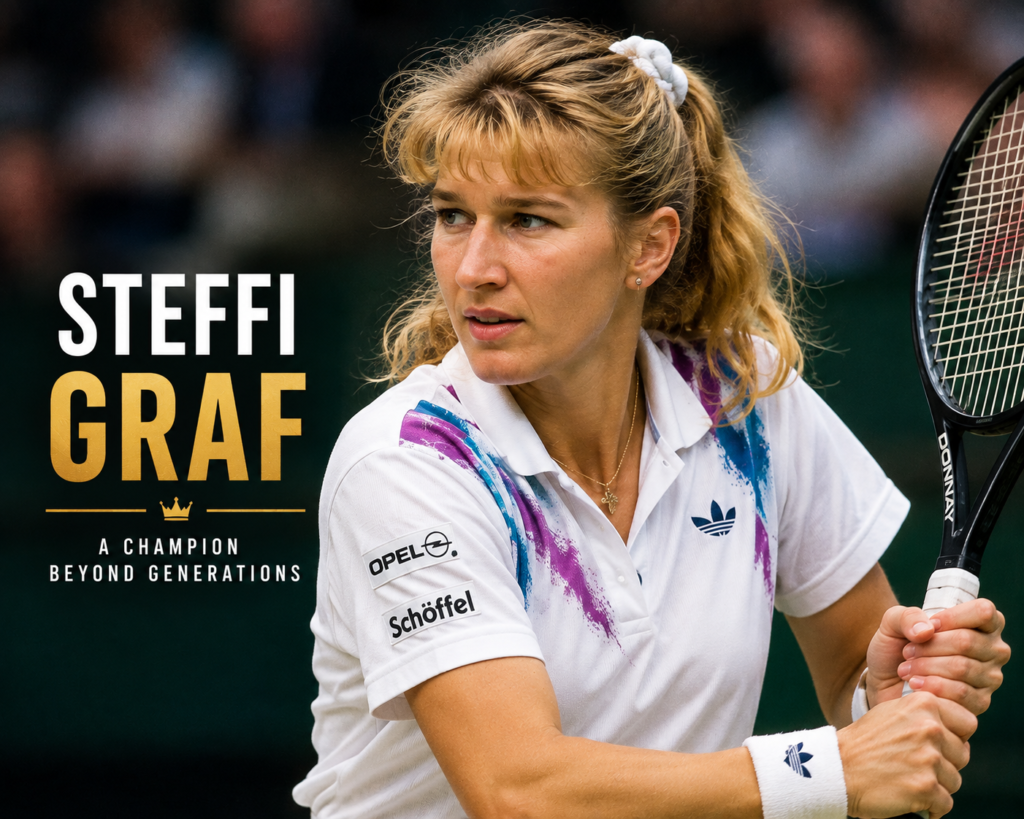
Steffi Graf is one of the most complete and dominant players in tennis history. The German champion won 22 Grand Slam singles titles during her career, including four Australian Opens, six French Opens, seven Wimbledons and five US Opens. Her career was highlighted by extraordinary consistency, powerful athleticism and one of the most dangerous forehands the women’s game had seen.
Graf’s greatest historical achievement came in 1988, when she won all four Grand Slam singles tournaments and the Olympic gold medal in singles in the same year. This achievement became known as the “Golden Slam,” an extraordinary accomplishment that remains one of the most famous records in tennis history.
Her playing style was based on aggressive movement and explosive attacking tennis. Graf’s forehand was particularly devastating, allowing her to dictate rallies and create openings. Her athletic movement around the court gave her the ability to turn defensive situations into attacking opportunities quickly. She was also extremely effective on grass, hard courts and clay, demonstrating the versatility required to win all four majors.
Wimbledon was one of Graf’s strongest tournaments, where she won seven championships. However, her six French Open victories also demonstrate that she could excel on clay. Her ability to adapt her game to different surfaces was a major reason for her long-term success.
Graf’s rivalry with players such as Martina Navratilova, Chris Evert and Monica Seles helped define different periods of women’s tennis. Her competition with Seles in particular represented a fascinating clash between two outstanding players from a changing generation. Graf’s ability to remain at the top through these competitive periods contributed significantly to her legacy.
Her 22 Grand Slam titles place her among the most successful singles players ever. The ITF lists her behind only Margaret Court and Serena Williams among women in total Grand Slam singles championships. Yet statistics alone do not fully explain Graf’s greatness. Her Golden Slam, exceptional movement, powerful forehand, versatility and dominance during the late 1980s and 1990s make her one of the most complete champions the sport has produced.
Why These Five Stand Out
The debate over the greatest tennis player of all time will never have one universally accepted answer. Different fans value different achievements. Some prioritize Grand Slam titles, while others consider peak dominance, longevity, head-to-head records, versatility or influence on the sport. However, Novak Djokovic, Rafael Nadal, Roger Federer, Serena Williams and Steffi Graf have particularly strong cases because they combined several of these qualities.
Djokovic currently holds the men’s record with 24 Grand Slam singles titles, followed by Nadal with 22 and Federer with 20. In women’s tennis, Serena Williams has 23 major singles titles and Graf has 22. These numbers alone demonstrate how extraordinary their careers have been.
Another reason these players stand apart is their success across different surfaces. Djokovic won every major multiple times, Nadal dominated clay while also winning major championships elsewhere, Federer excelled particularly on grass and hard courts while completing the Career Grand Slam, Serena won majors on every surface and Graf achieved the Career Grand Slam alongside her historic Golden Slam.
Their careers also span different eras of tennis. Graf represented the elite women’s game of the late 1980s and 1990s, Federer emerged as a dominant force in the early 2000s, Nadal became the king of clay while challenging Federer and Djokovic, Serena dominated women’s tennis across multiple generations, and Djokovic ultimately established one of the greatest statistical records in men’s tennis.
Conclusion
The greatest tennis players are not defined by trophies alone. They are remembered for the way they changed matches, inspired fans and influenced future generations. Novak Djokovic’s extraordinary records and mental resilience, Rafael Nadal’s unmatched clay-court dominance and fighting spirit, Roger Federer’s elegance and all-court brilliance, Serena Williams’ power and historic longevity, and Steffi Graf’s versatility and Golden Slam have each left an unforgettable mark on tennis.
There are many other legends who deserve consideration, including Margaret Court, Martina Navratilova, Chris Evert, Pete Sampras, Björn Borg, Andre Agassi, Billie Jean King and many others. The modern game is also producing new stars such as Carlos Alcaraz and Jannik Sinner, who are already building impressive Grand Slam résumés. The ATP Tour notes that by 2026 Alcaraz had won seven men’s Grand Slam titles, while Sinner had captured the 2026 Wimbledon championship.
Ultimately, ranking the top five is a matter of interpretation. But if Grand Slam success, longevity, versatility, dominance, mental strength and influence are combined, Djokovic, Nadal, Federer, Serena Williams and Graf form an exceptionally strong list. Their achievements have shaped tennis history, and their records will continue to provide the benchmark against which future champions are measured.